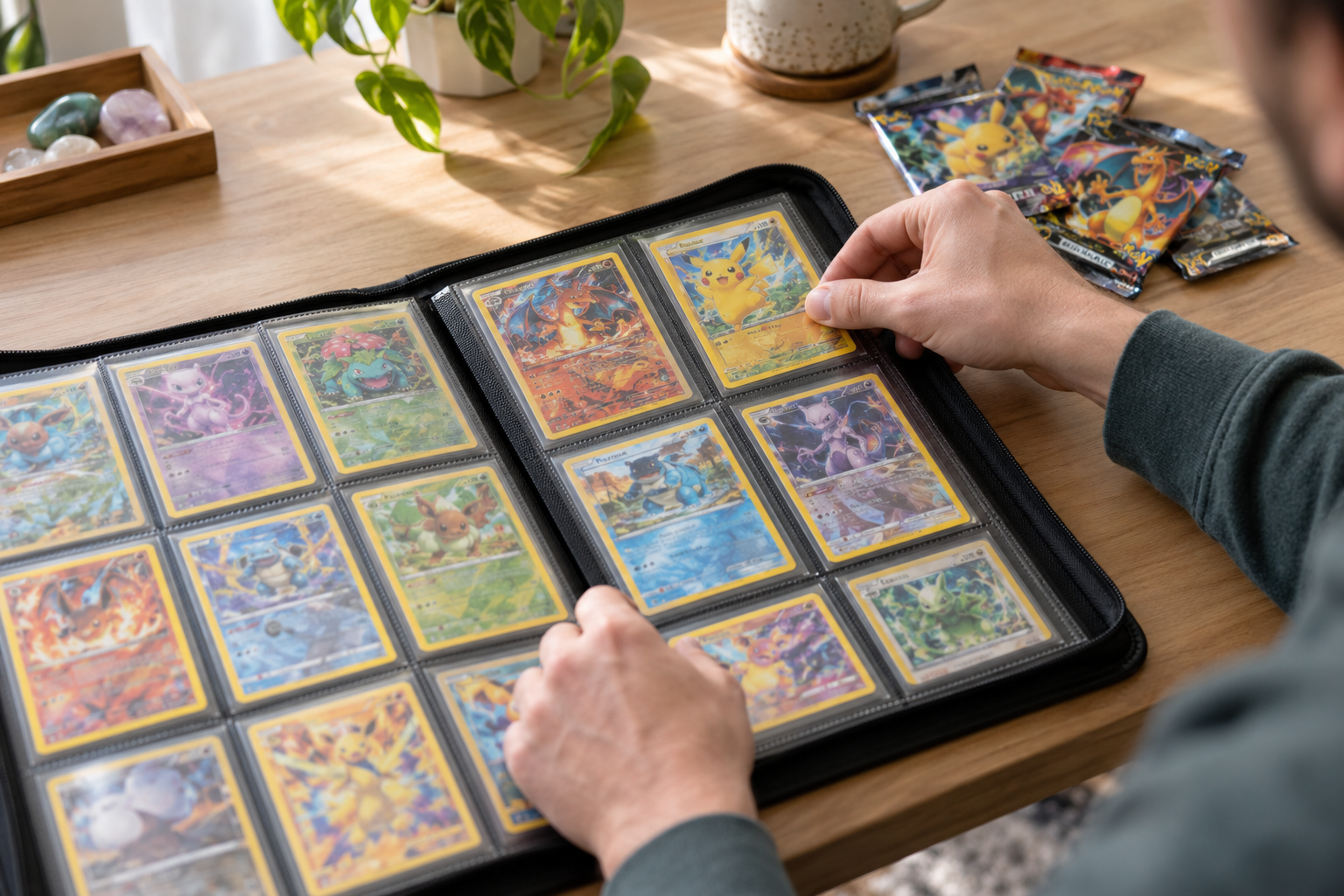
Opening a Pokémon pack is part discovery and part anticipation, but choosing what to buy becomes easier with a clear collecting goal. A pokemon booster box may suit someone planning a larger opening from one expansion. A collector exploring unfamiliar artwork might prefer a smaller purchase before committing to that set. Individual pokemon card packs offer a way to spread that experience across several collecting sessions. The decision also depends on whether the aim is completing a binder, finding favourite characters or enjoying an occasional opening. A collection of pokemon cards can follow any of these directions without needing to include every release.
Start With a Collection Worth Building
A useful collecting goal is specific enough to guide purchases without making the hobby feel like homework. Someone might collect one favourite Pokémon across different illustrations, focus on a particular expansion or build a small selection of artwork around a theme.
These approaches lead to different buying decisions. A collector interested in exploring one expansion may enjoy opening several products from that release. Someone seeking a handful of particular illustrations has a narrower objective and should consider whether random packs suit it.
Looking through an expansion’s card gallery before purchasing can help. It gives collectors a chance to assess the wider selection, rather than choosing a product because one heavily discussed card appears in the set.
A practical question is whether the ordinary discoveries would still be enjoyable. If only one possible card makes the purchase appealing, buying that card individually may be a more direct option. Opening sealed products makes more sense when the experience and the broader range of contents are part of the attraction.
Compare the Contents Behind the Packaging
Product names and box sizes do not provide enough information on their own. Before comparing prices, collectors should check the exact expansion, language, number of packs and any listed extras.
A larger package may contain accessories or a fixed promotional card alongside its packs. Those additions can be useful, particularly for a new collector, but their value depends on whether they are actually wanted. An established collector with spare sleeves and storage boxes may assess the same product differently.
For New Zealand buyers comparing local and overseas listings, the delivered total in New Zealand dollars provides a more useful starting point than the advertised price alone. Delivery charges and currency conversion can change an apparently attractive comparison.
Dividing the delivered total by the number of packs gives a basic cost per pack. However, comparisons are clearest when the products contain the same expansion and language. Any fixed extras should then be considered separately, rather than treated as evidence that one package offers better random contents.
Quantity also needs checking in the listing. Similar-looking products from different releases or markets should not automatically be assumed to contain the same number of packs.
Keep Expectations Grounded in Random Contents
The distinction between listed contents and random contents matters. A product may specify its pack count and promotional card, while leaving the cards inside those packs unknown.
Official Pokémon support explains that a particular Pokémon or card type is not guaranteed in an individual booster pack. Pokémon Center support also states that booster boxes do not guarantee specific higher-than-rare cards or card types. A larger opening therefore should not be treated as a promise of a particular result.
Online opening videos can make expectations harder to manage. A memorable reveal attracts attention, but another person’s result does not establish what the next purchase will contain.
Setting a spending limit before opening helps keep decisions separate from the excitement of the moment. That limit might cover one collecting session or a month of hobby purchases. Once it is reached, sorting and enjoying the collection gives the opening a natural endpoint.
For collectors working towards a set, a missing-card checklist can make later purchases more deliberate. After the initial openings, reviewing the gaps may reveal that trades or individual purchases would contribute more than another sealed product.
Give Every Opening a Useful Follow-Up
A little preparation makes sorting easier. A clean, dry surface, suitable sleeves and space for separate piles allow cards to be organised without being scattered around the table. Food and drinks are best kept away from the opening area.
Afterwards, collectors can divide the contents into new additions, duplicates and possible trades. Organising by expansion and collector number makes a set-focused binder easier to review. A character-focused collection may work better when different illustrations sit together.
Duplicates do not have to become an untidy leftover pile. Keeping them organised allows collectors to identify trading options and avoid buying something already owned.
A simple record of recent purchases can also help refine the next decision. It might show that smaller openings are more enjoyable, that one expansion holds more appeal than another, or that a favourite-character collection provides a clearer direction.
A satisfying collection grows from those preferences. Choosing suitable products, understanding their contents and taking time to organise each opening gives collectors more to enjoy than the brief moment when a wrapper comes off.